The Playbook for AI Adoption in the Real Economy
The three-step playbook we use to take real businesses from zero AI to agentic: build your harness, move it to the cloud, then run your own inference.
If we're still having the conversation about whether AI is useful… we're behind.
It's useful. That debate is over. These days you can throw compute at just about any problem and get an answer. In September, OpenAI announced its AI agents had solved a version of Navier-Stokes, a roughly 90-year-old math problem and one of the $1M Millennium Prize problems, in an 88-hour run. (Mathematicians are still checking the work, but think about that for a second.) Two weeks later, Anthropic said Claude had found a new CRISPR-like biological system. And ever since AlphaFold, AI has been doing things humans flat out couldn't.
So here's the part that business owners are missing when they worry about things changing too fast to make a decision: it doesn't matter if the models get any smarter.
News flash! Most of the work we do in our businesses is not that complex. We aren't exactly curing cancer on a daily basis. There is plenty that cheap, open-source models can do better than me.
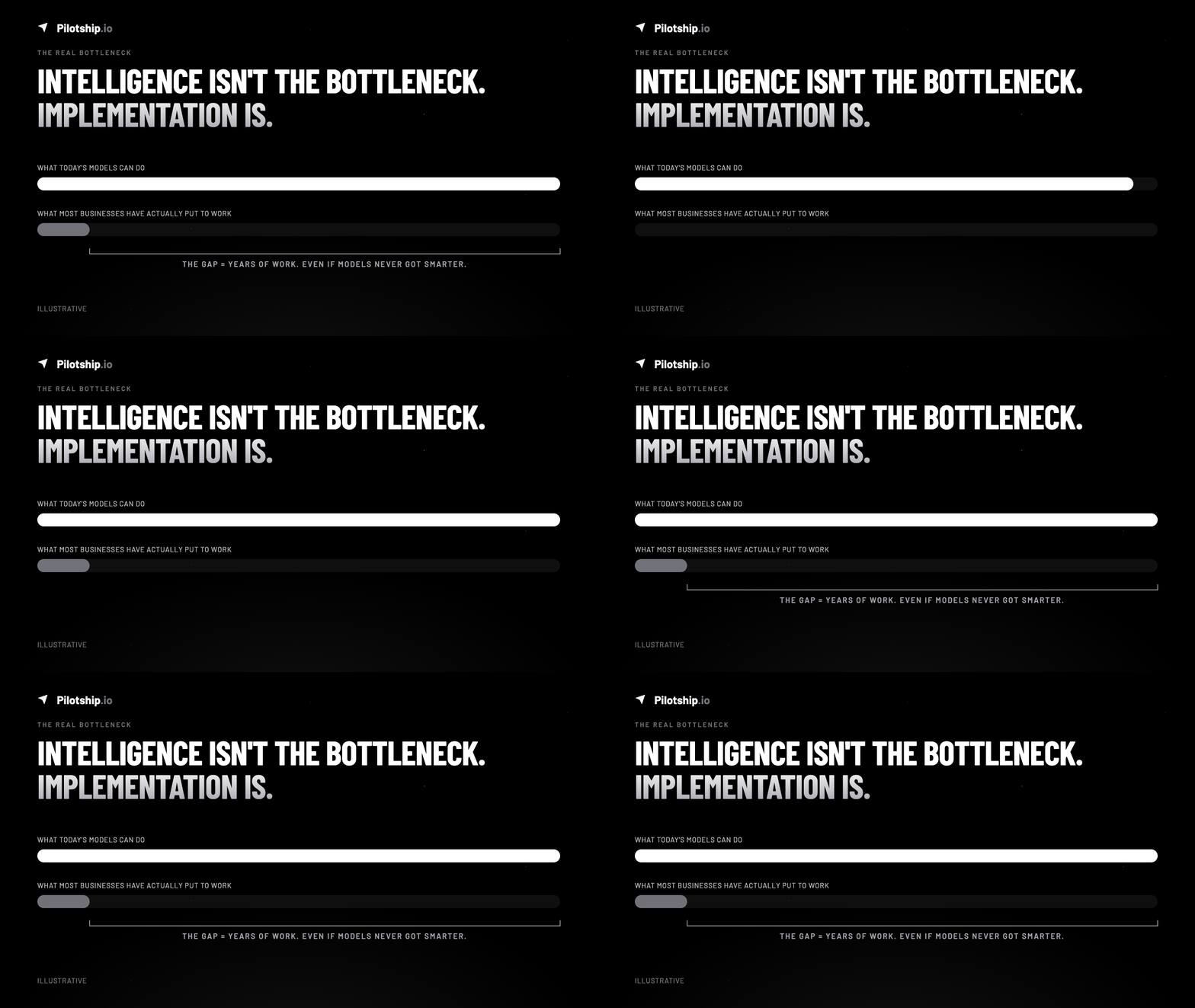
I firmly believe that if model progress froze today, we could spend the next ten years just putting the intelligence we already have to work across the economy and inside the workflows of real businesses. Intelligence isn't the bottleneck anymore. Implementation is, and that's the fun part. (We wrote about the size of that gap in the small business AI adoption gap.)
That's what this playbook is about. Not what AI could do. What it looks like to actually put it to work in a real business, step by step, with real examples. Today we will discuss systems. Training and empowering your people is an important conversation for another day.
Why we have an opinion on this
For the past year, our team at Pilotship has been doing exactly this. We've worked with 50 million dollar retailers, steel distributors, real estate developers, sports agencies, marketing agencies, a log home manufacturer, tech companies, and plenty in between.
Some of them have been around 20+ years, with processes that are incredibly good and tediously manual. Some are brand new and still figuring out how they work.
What's important to you as a business owner is that this playbook is the same every time. Whether you are a 20-year-old business doing 50 million in revenue or a startup just fleshing out your processes, you can follow it. (Sorry enterprises, I am unfamiliar with your needs just yet.)
It breaks down into three steps. But first you need one concept, because everything else builds on it.
The model vs. the harness
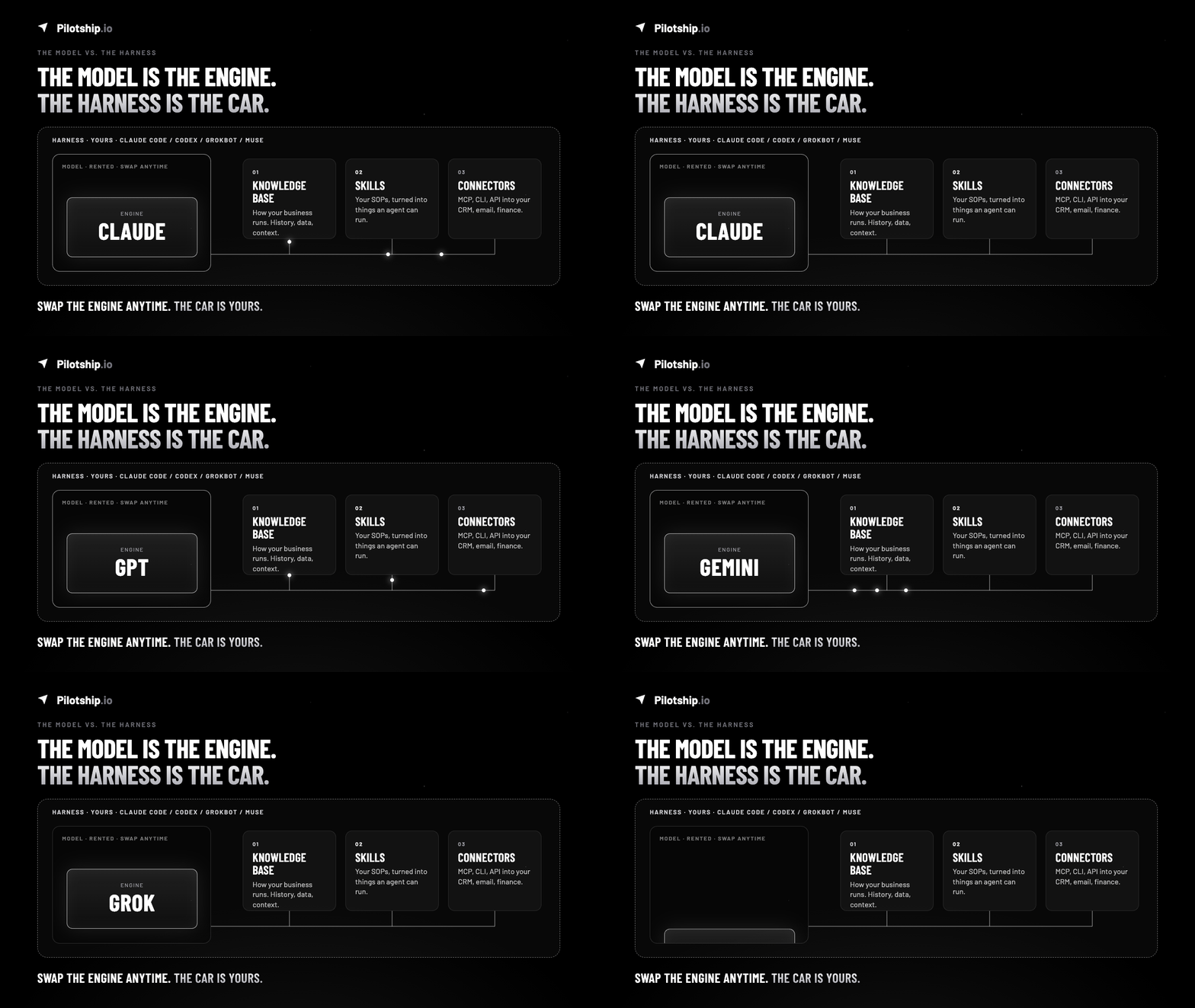
An AI model is the engine. Claude, GPT, Gemini, Grok. These are wildly powerful systems that generate a huge amount of intelligence.
The problem? An engine sitting on your garage floor doesn't take you anywhere. That power is close to useless until it's connected to real tools, real context, and real information about your business.
An AI harness is the rest of the car. The wheels, the steering, the transmission. Think Claude Code, Codex, GrokBot, Muse. A harness is the software you plug a model into so it can connect to the tools your company uses, know everything about how your business works, and actually act on your behalf inside your own systems. (If you want the basics on what an agent is first, start with what is an AI agent.)
That can get as technical as plugging into your cloud infrastructure, watching your audit logs, and writing and shipping code fixes as issues come up. Or it can be as simple as reading your latest email and drafting a reply to a vendor while updating your CRM.
Here's the key: when you own the harness, you can swap the engine anytime. The car is yours. Every step below is built so you keep the harness no matter which model is best next month.
Step 1: Build your harness on top of the giants
You don't start from scratch. Anthropic, OpenAI, xAI and Meta have already built incredible harnesses. Build on top of them.
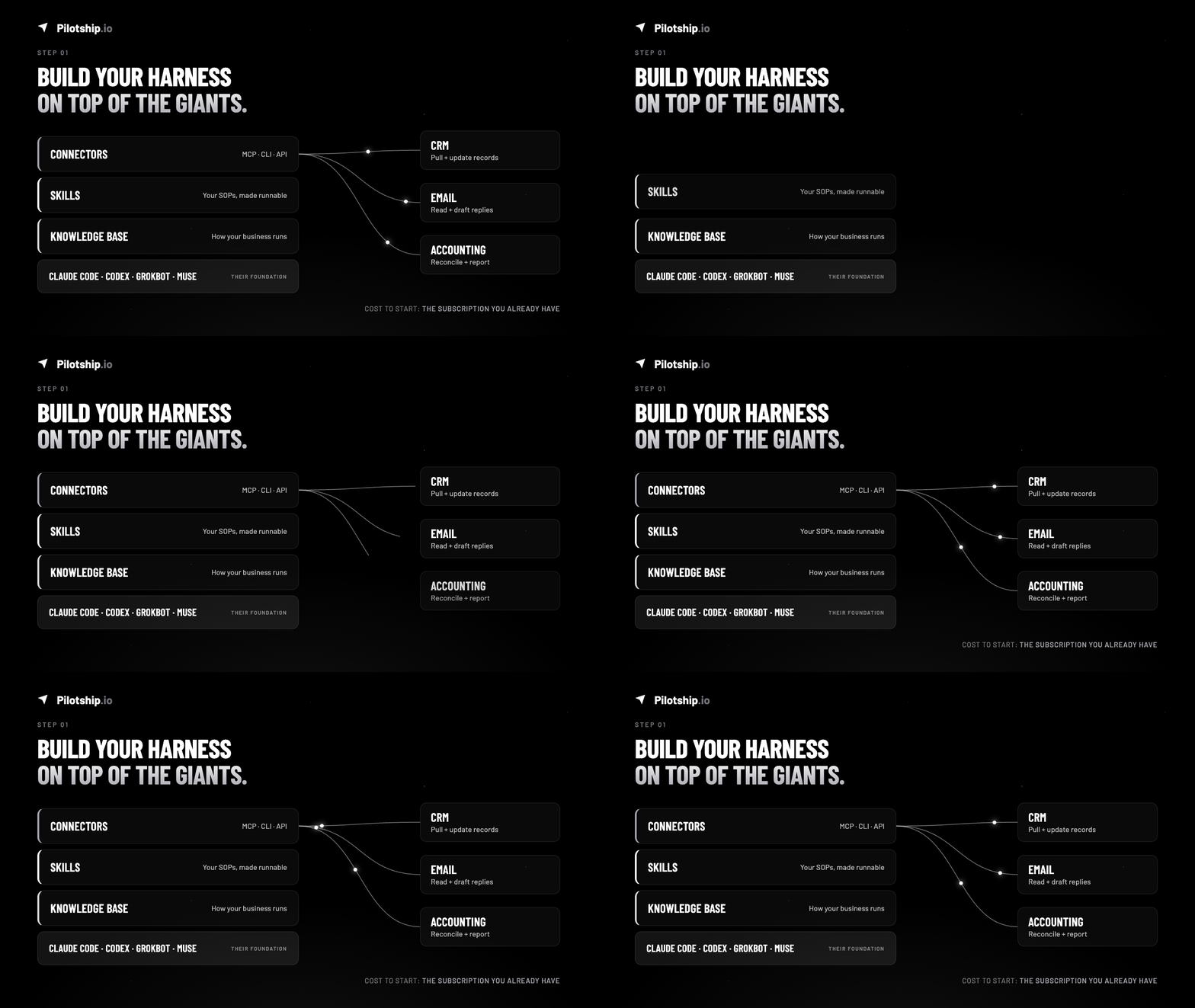
Your harness on top of Claude Code or Codex comes down to three things.
1. A knowledge base (your "ontology"). A knowledge base is the layer that gives an AI agent the context of everything about your business: how you operate, your history, your data, and all the things you've spent years perfecting as an owner. In practice it's often just a folder of plain files. Who your customers are. How you price. What you promised whom. Why you made the decisions you keep re-explaining. If you're a new business, even better. You get to build your systems with AI from day one and be AI-native from the start.
2. Skills. A skill is one of your standard operating procedures, written so an agent can run it. Already have SOPs written down? Great, they become skills. Don't have them yet? Writing them is the work, and the agent can help. Start with the SOP you explain most often.
3. Connectors. Any good harness connects to your systems through MCP (a standard way for AI to plug into outside tools), a CLI, or an API. Your CRM, your email, your accounting, all of it. Now your agent isn't just reading your SOPs. It's running them across your real systems: pulling from the CRM, updating it, drafting the email to the vendor. (We broke these down in MCPs, CLIs and connectors for small business.)
Along the way you might build a local database or a simple local CRM with Claude right on your computer. That's you dialing in the software behind what will become your platform. It allows you to perfect your own custom tooling that your agents will use in Step 2.
And the best part? It's cheap. You're running all of this on a Claude, ChatGPT, or Grok subscription. You're borrowing what the giants have already built and building your harness on top.
What it looks like in real life
Here's my favorite example of the knowledge layer doing real work. Honka is the Finnish log home manufacturer, founded in 1958. Mark and Tom run the US business, selling homes that mostly start at $1M+. Every personalized spec sheet a prospect received had to be written by hand, by Mark or Tom, every time. So only the strongest leads got one.
The fix wasn't a smarter model. It was getting their knowledge out of their heads and into the system. Their best sales pitches (the ones that actually close) now live in the software. When a prospect says fire safety matters to them, the same pitch Mark would give on a call gets woven into that prospect's spec sheet, automatically, in under 10 seconds.
The founders aren't in the room. The system is. That's a knowledge base and a skill, doing a founder's job at 2am.
You're ready for Step 2 when…
- You catch yourself pasting the same context into the AI every morning.
- Someone else on your team wants what you have, and you can't hand it to them.
- The thing you built is something the business would miss if your laptop died.
The common mistake
Buying a tool before writing anything down. A new AI product on top of undocumented processes just automates the confusion. Write the knowledge base first. It's the asset. The tools change every quarter. Your knowledge doesn't.
Step 2: Move your harness to the cloud
This is where it gets fun, because every step builds on the last.
Take everything from Step 1 (the knowledge base, the skills, the connectors, the database, the code) and move it off your laptop into your own cloud platform. You're often building that platform with Claude or Codex too.
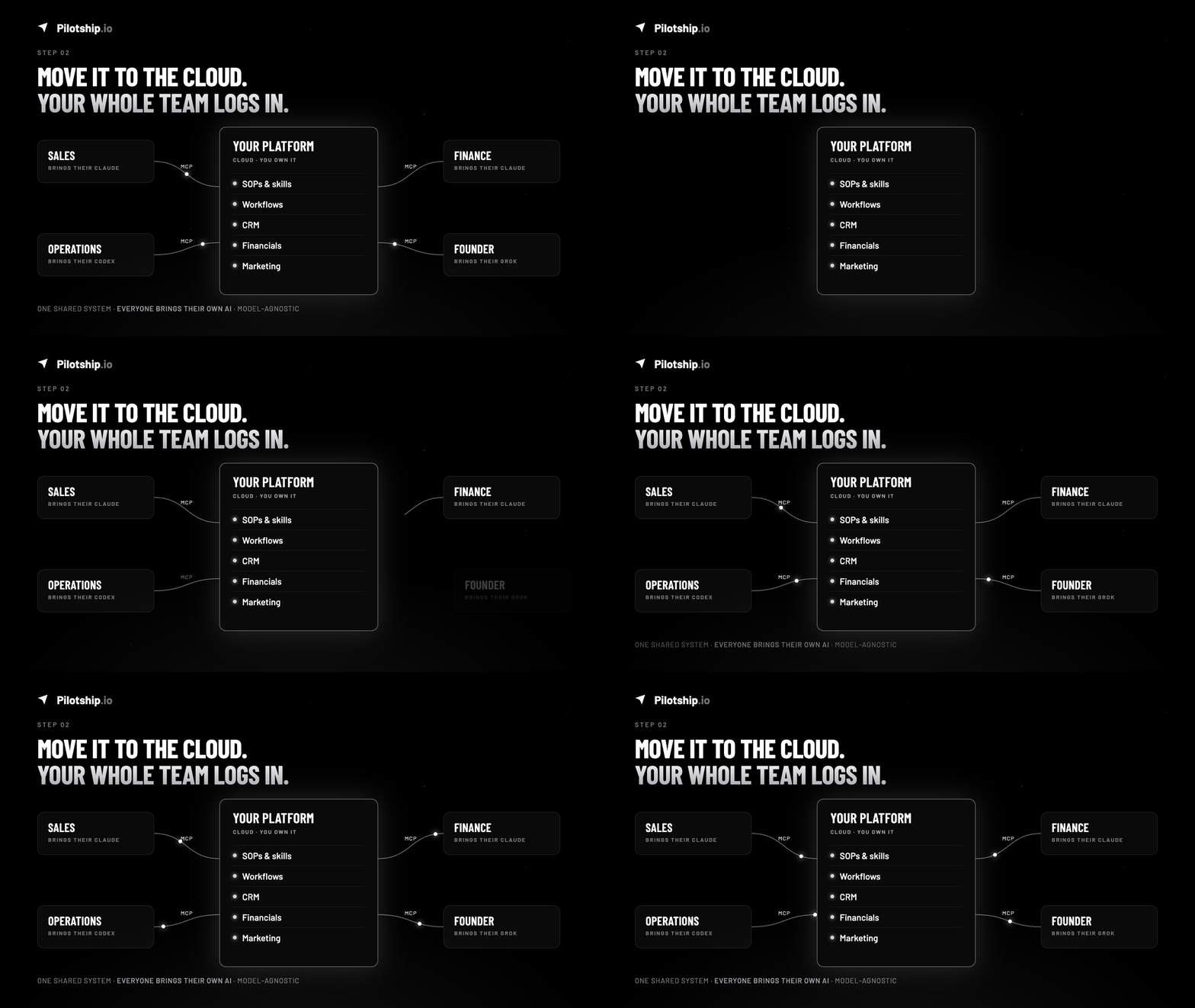
This is one of the first things we did for Pilotship itself. We built a system our Claude can call over MCP, and everything lives in there: our SOPs, our workflows, our CRM, our financials, our marketing. Our whole business runs in custom cloud software that we own and our whole team has scoped access to.
But here's the beauty of it… we still use Claude, Codex, and others every day. Each person on our team connects their own AI subscriptions (on team or enterprise plans for data security) to our platform. So instead of everyone having their own local setup, we have one shared system the whole team logs into and works in together.
We own it. It's model-agnostic (it works with whichever AI model we plug in). And it's built for the way we work.
You also don't have to pick between Step 1 and Step 2. Keep building new tools locally, and when one proves itself, push it up to the shared platform. That loop becomes how your company keeps innovating.
What "scoped access" means, and why it matters
Moving to the cloud is also the moment security gets real. Once a whole team (and their AI) can reach your systems, everyone should see only what their job needs. Sales doesn't need payroll. An agent drafting vendor emails doesn't need to delete customer records. And nothing should send itself. In what we build, agents draft and a person approves.
You're ready for Step 3 when…
- The same workflow runs dozens or hundreds of times a week.
- You can describe each job in it clearly enough to hand it to a new hire.
- The AI bill, or the time spent babysitting the AI, starts to show up as a line item.
The common mistake
Moving to the cloud and locking yourself to one AI company in the process. If your platform only works with one model, you've traded your laptop for someone else's walled garden. Keep the engine swappable.
Step 3: Run your own inference
The last step is simple to say: move your workflows all the way to the cloud and run them on your own inference.
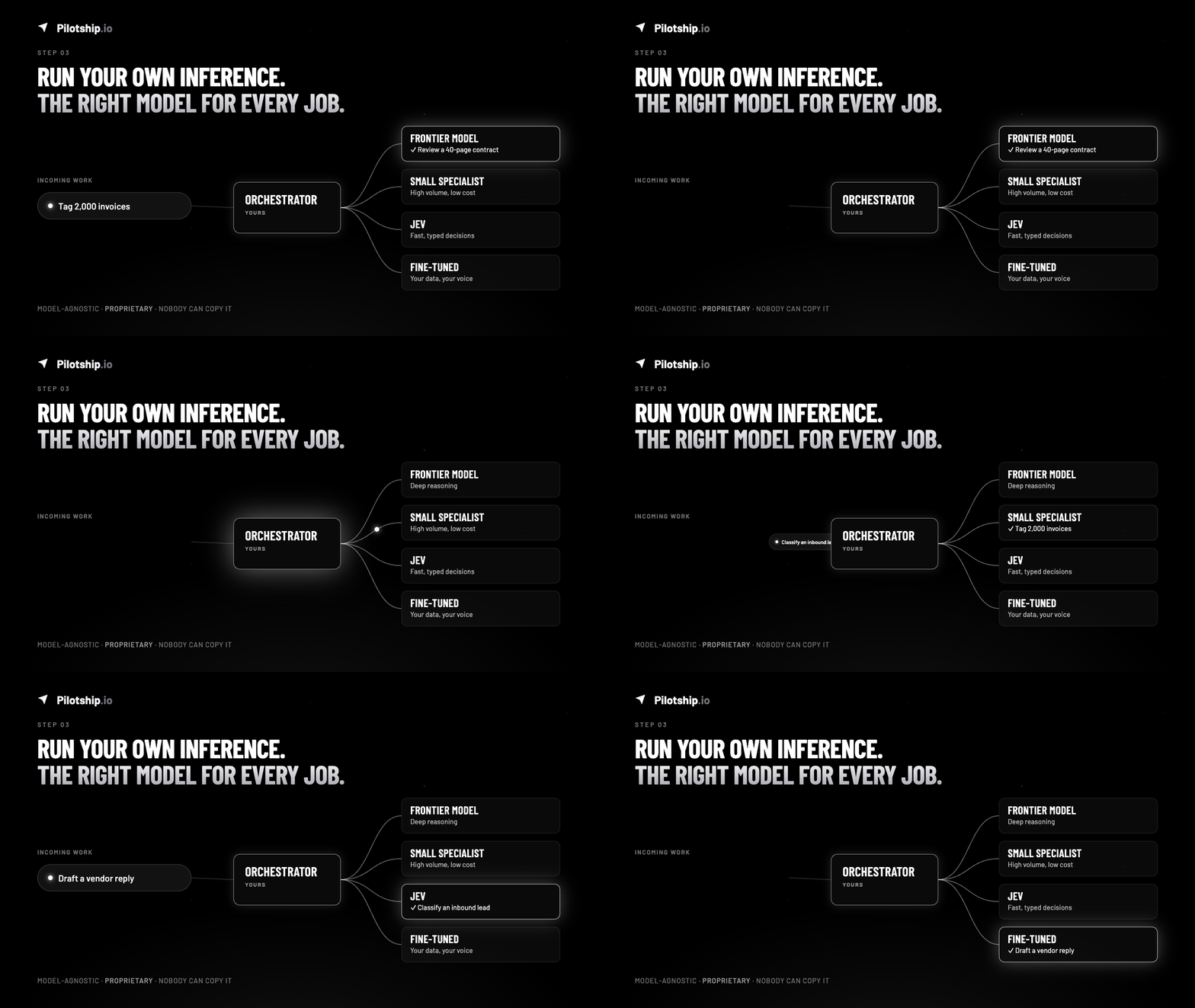
Inference is the moment an AI model actually does the work: reads the input and produces the answer. "Running your own inference" means your system decides which model gets each job and calls it directly, instead of every task going through one chat app.
Now you control the orchestration. You choose which model does which job. A workflow doesn't have to run entirely on Anthropic or entirely on OpenAI. You can plug in small, specialized models for specific tasks, and newer kinds of models like Jev that are built for fast decisions inside a workflow.
This is where your system becomes truly proprietary. It's built around how your business runs, and nobody can copy it.
What it looks like in real life
Relevance Advisors sells its expertise through a six-stage SEO and AI search audit. Done by hand, it took a senior consultant 6 to 8 hours. We built an agent that now runs it in about seven minutes, for about $0.16 in data and model costs per audit.
Two details matter for this playbook. First, it runs in Relevance's own Google Cloud project. The agency owns the tool, and its clients' data never leaves its account. Second, it's built on purpose-picked pieces, not one chat window: it crawls the site, pulls SEO data, and checks four AI engines live on every run.
Honka is the same story at a smaller scale. For the spec sheets, we picked Claude Haiku over a bigger model on purpose: it was fast enough to feel instant, followed the format just as well, and cost a fraction as much. The right model for the job is usually not the biggest one.
The common mistake
Jumping here first. Running your own inference without Steps 1 and 2 is like buying a race engine before you own a car. The orchestration is only as good as the knowledge base and skills underneath it.
What "autonomous" actually means
Step 3 is also where large parts of your business can start running autonomously.
Does that mean you don't need people anymore? Hell no.
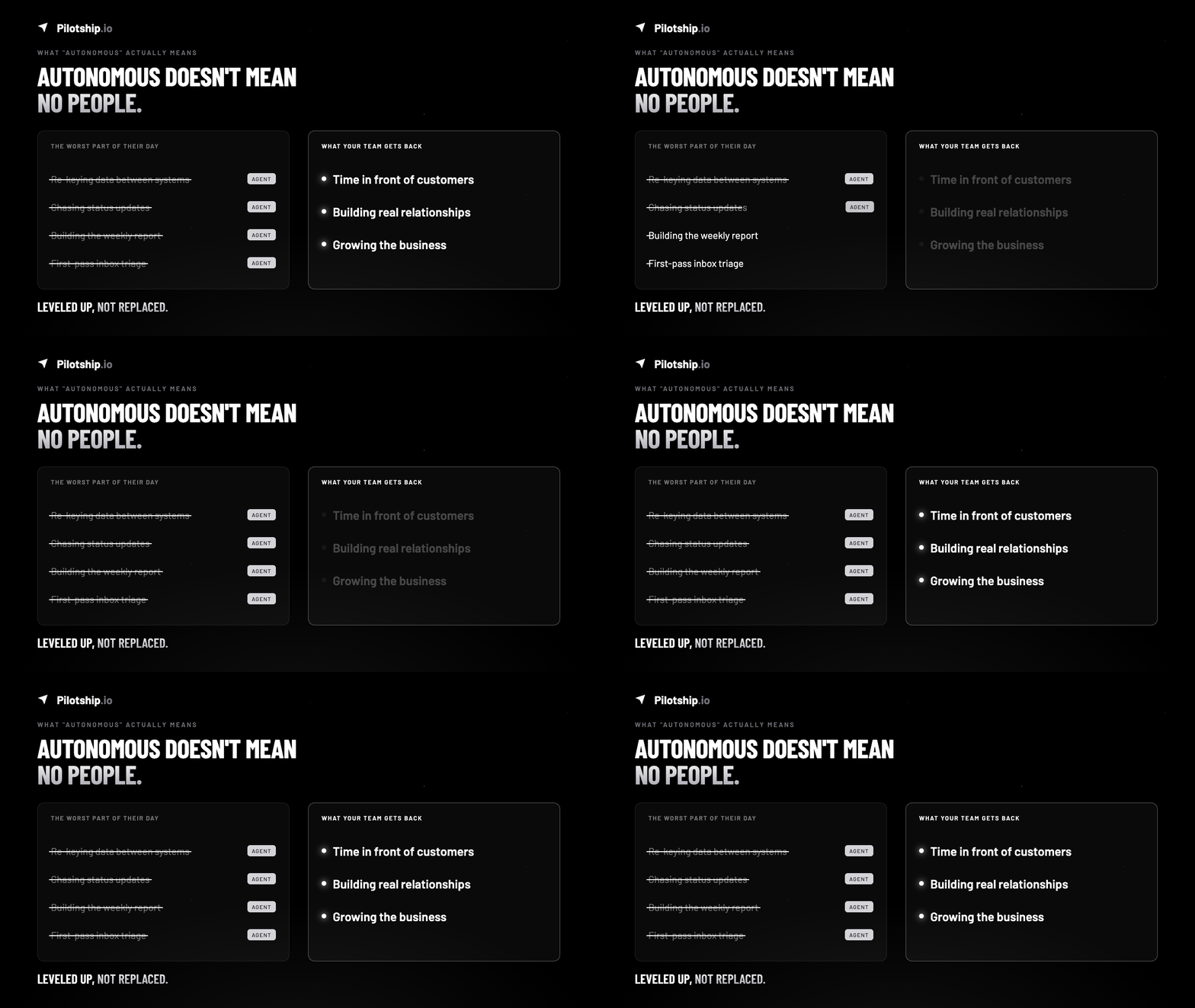
It means taking hours of monotonous work off your team's plate. The stuff that's honestly the worst part of their day. It frees them up for the work that matters: being in front of customers, building relationships, and growing the business.
In every business we have worked with and across the industry we hear one clear throughline: the more you adopt AI, the more customers you have to serve, and the more your need for people grows. There is more work, and better yet, that work is free of tedious data entry. Don't believe me? Check out this podcast with the co-founder of Long Lake.
You get a far more efficient company and a team that's leveled up, not replaced.
The whole playbook in 30 seconds
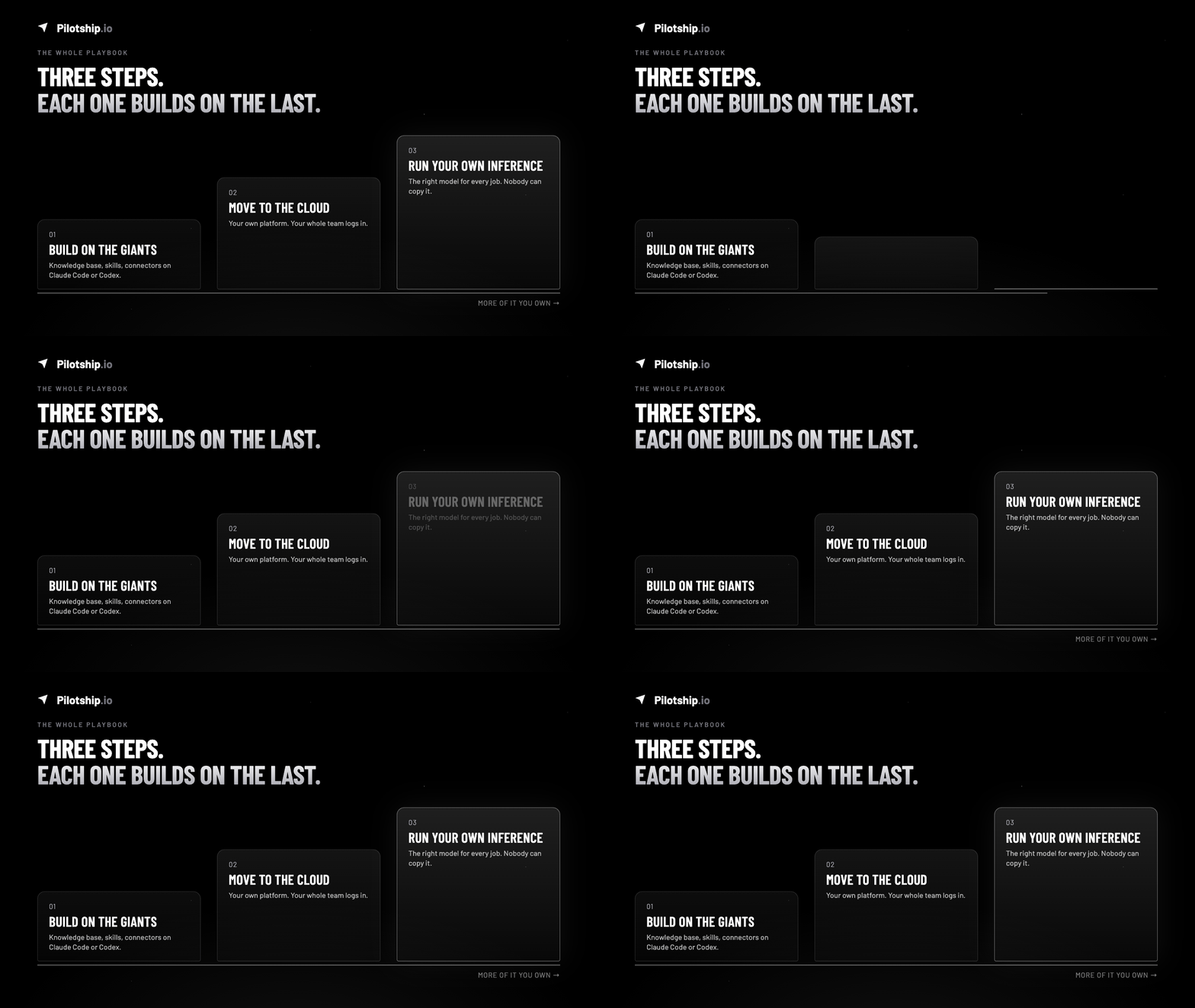
- Step 1: Build your harness on top of Claude Code or Codex. Knowledge base, skills from your SOPs, connectors to your systems. Cheap, fast, and you learn a ton.
- Step 2: Move it to the cloud. Your own platform that your whole team logs into, still driven by the models you already pay for.
- Step 3: Run your own inference. Orchestrate the right model for every job, and build something that is truly yours.
This is the exact path we use to take a company from not touching AI at all to fully agentic. And my honest advice is simply to start. Every week you spend defining your harness is a week of compounding advantage.
Want a roadmap for your business?
You can start on your own today. Open Mission Control and answer a few questions. It drafts a written plan for the first thing worth building, free, no signup. Paste that plan into Claude or ChatGPT for a second opinion on cost and feasibility.
And if you'd rather have help, we're building free AI roadmaps for companies: a sit-down with Seth Martin, our development team, and a plan you can follow on your own. No cost, no strings. Ask for a roadmap here.
Happy building!
Phil