Honka
AI Configurator & Personalized Spec Sheets
KotiConfig is an AI-native home configurator we built for Honka, the Finnish log home manufacturer founded in 1958. Branching pricing flow, A/B/C/D lead tier scoring, and Claude-generated personalized spec sheet PDFs that weave the founders’ own sales pitches into each prospect’s words — embeddable on any partner site.
- Client
- Honka US
- Industry
- Premium custom homes
- Our role
- Design + build
- Timeline
- 6 weeks to prod
- Stack
- Next.js 16 + Supabase + Claude
- Status
- Live, generating leads
The Challenge
Pilotship.io partnered with Honka US, the American arm of Honka — Finland’s largest log home manufacturer, founded in 1958 with 85,000+ buildings delivered across 50+ countries. Mark and Tom run the US business, selling premium custom log homes (most starting at $1M+) to American buyers through a HubSpot marketing site they’d built campaign-by-campaign over years.
Two things weren’t working. The configurator they were renting from a third-party vendor was generic, hard to modify, and gave them no way to qualify the prospects coming through. And every personalized spec sheet that went out had to be written by hand — by Mark or Tom — every time. With a long sales cycle and seven-figure builds, every prospect deserved a personalized answer. The system meant only the strongest leads got one.
They needed a tool that did what they’d been doing manually — but at scale, in their brand voice, in the time it takes Claude to read a JSON object.
You dug right into the project — you took it on as if it was your business. What if we did it this way? You actually improved upon what we had. You can’t ask for any more than that from a professional service. That’s like off the charts.
Tom · Honka US
What we built
KotiConfig is an AI-native home configurator. Prospects step through a branching flow with live pricing. Mid-flow, a lead-capture wall. On submit, Claude generates a personalized PDF spec sheet — using Mark and Tom’s own sales language — and the lead is scored A/B/C/D so they know who to call first.
Feature 01
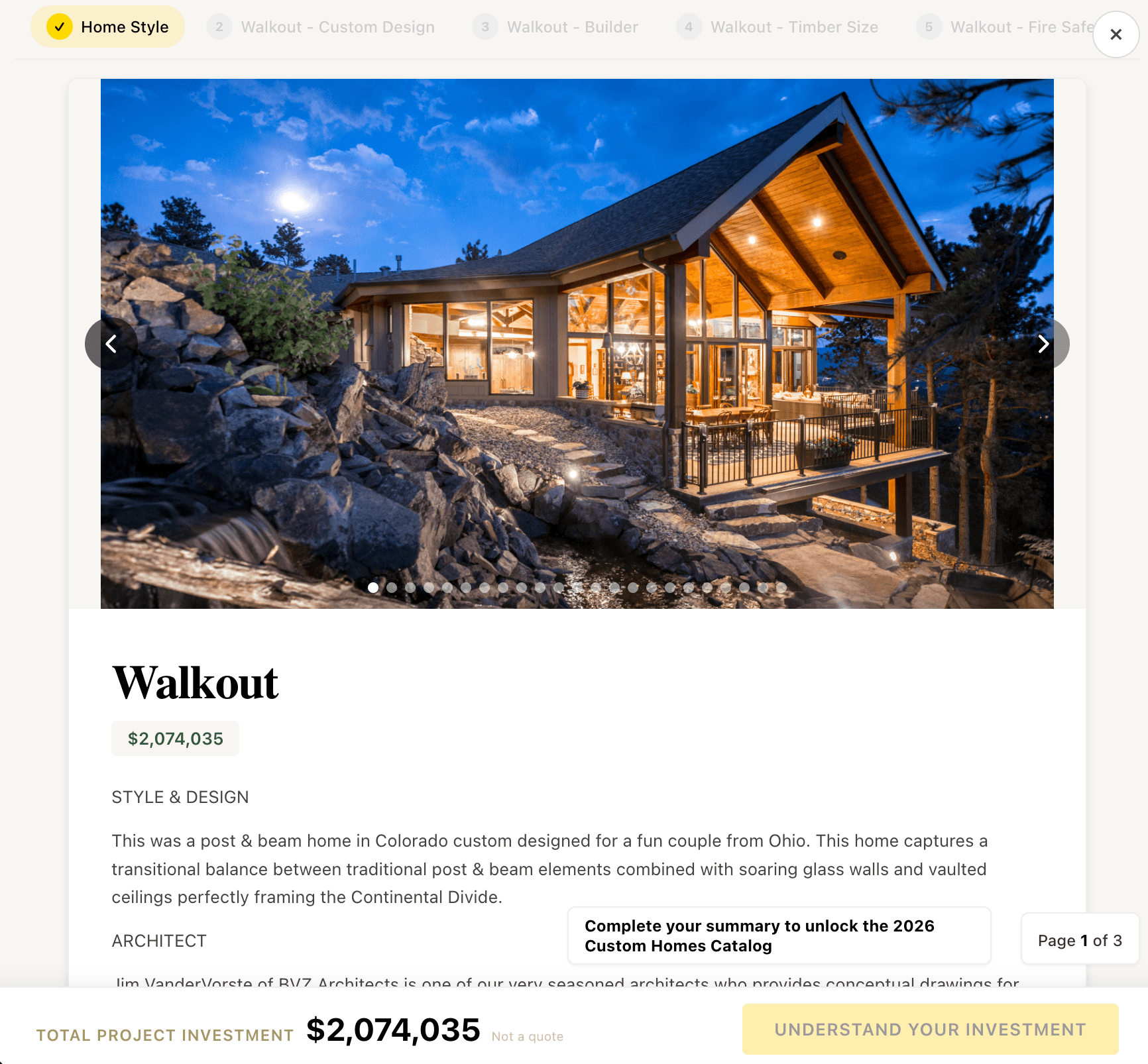
Branching configurator with live pricing
Every step branches based on what the prospect picked the step before. Selecting Walkout swaps the next five steps for a walkout-specific path; selecting Ranch loads a different one. Pricing updates as they go — so by the time they hit submit, the number on screen matches the PDF they’re about to receive.
Feature 02
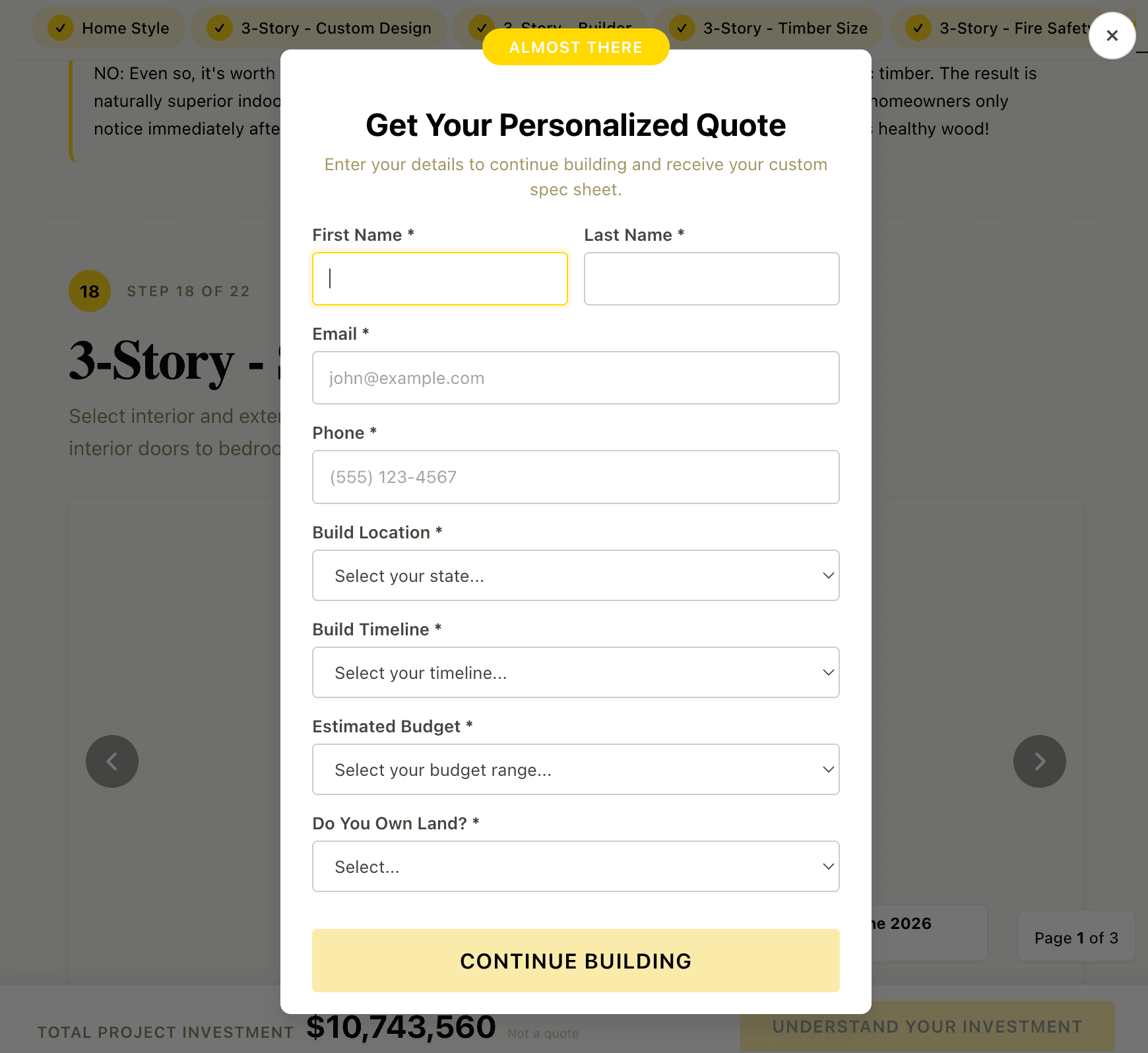
Lead capture at the right moment, not the front door
No splash page. No paywall on the home page. The prospect gets to explore the configurator and watch the price form — and only then, mid-flow, hits a clean capture wall that asks for the information Mark and Tom actually need to qualify: location, timeline, budget, whether they own the land.
The modal is configurable from the admin panel — Mark and Tom can move the wall earlier or later in the flow without writing code.
Feature 03
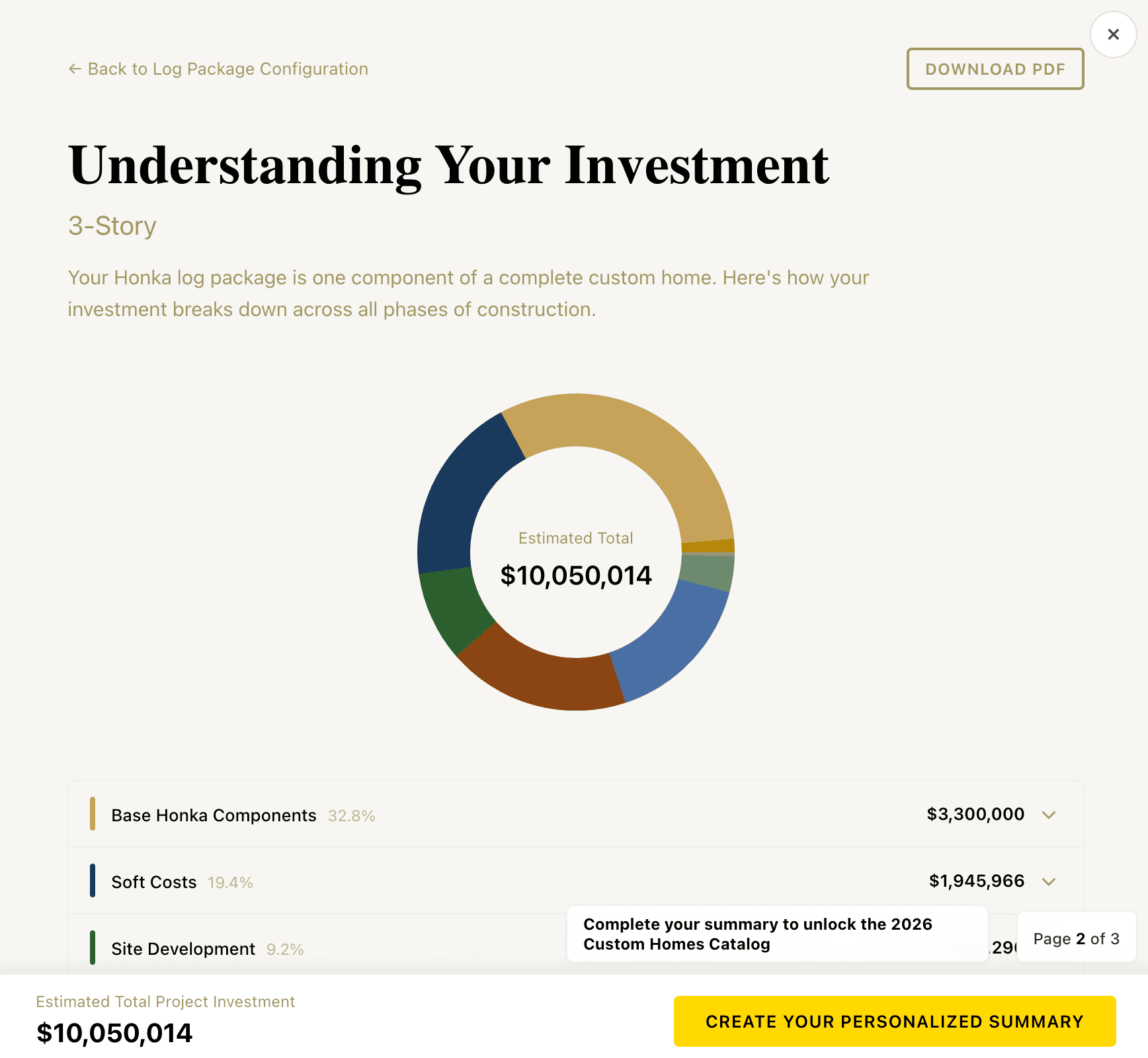
Investment breakdown they can actually understand
After the configuration step, prospects see exactly where their money goes — base Honka components, soft costs, site development, upgrades — as a donut chart with an expandable accordion. No spreadsheet. No surprise line items at signing.
Feature 04
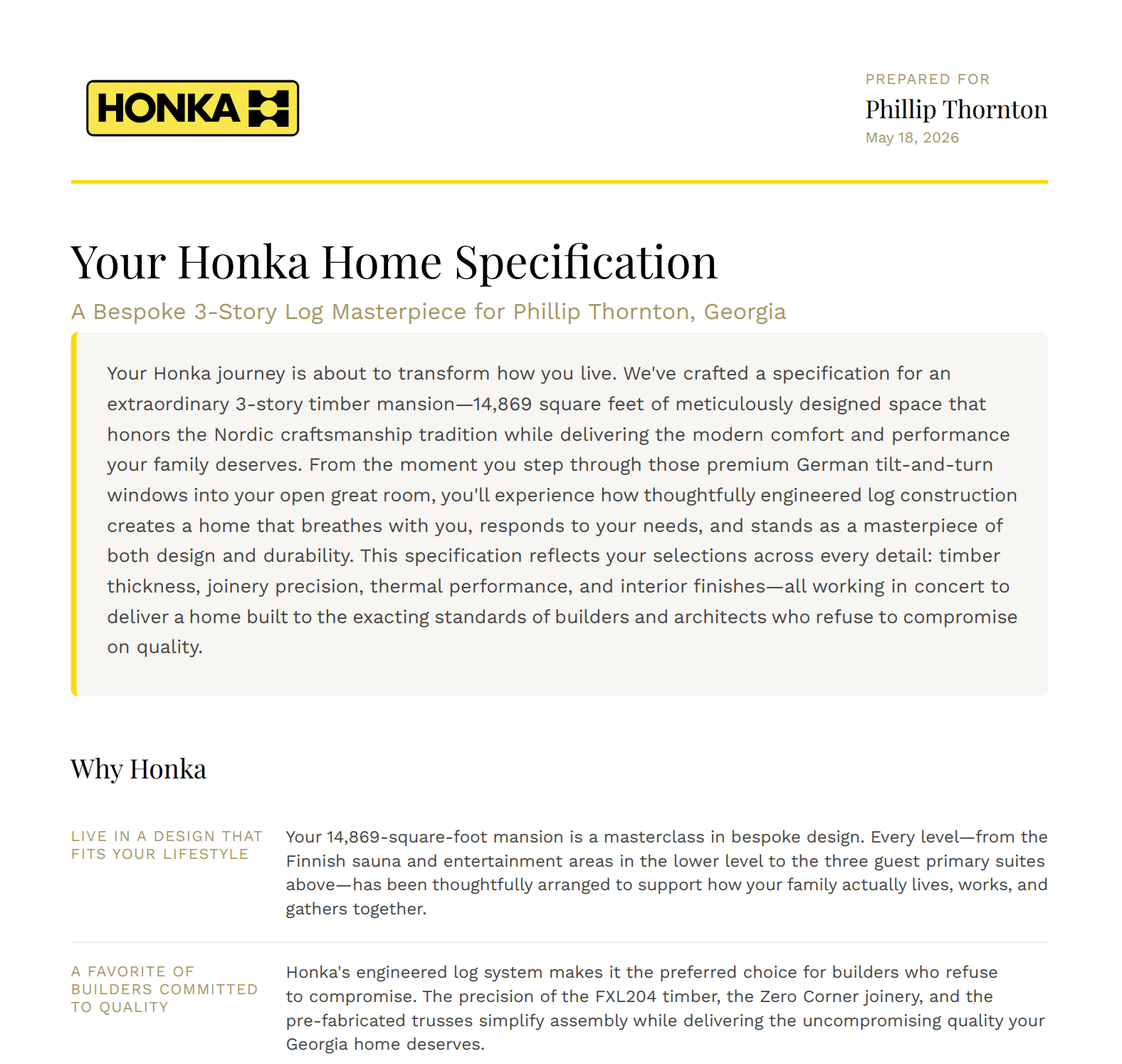
Personalized spec sheet PDFs, generated by Claude
On submit, Claude reads the prospect’s selections plus their answer to the anchor question — “what must your new home give you that your current one doesn’t?” — finds the matching Honka pitches (fire safety, energy efficiency, legacy, healthy indoor air), and writes a branded PDF that opens with the prospect’s own vision in their own words. Brand fonts. Brand colors. Same PDF Mark or Tom would have written by hand — in under 10 seconds.
Inside the AI
The founder pitch weave
The most distinctive thing in the codebase isn’t a model or a framework. It’s an array. Mark and Tom’s best sales pitches — the ones that actually close — live as code. When a prospect answers “yes, that matters to me,” the same pitch shows up inline in the configurator and gets woven into their personalized spec sheet PDF, in their own words.
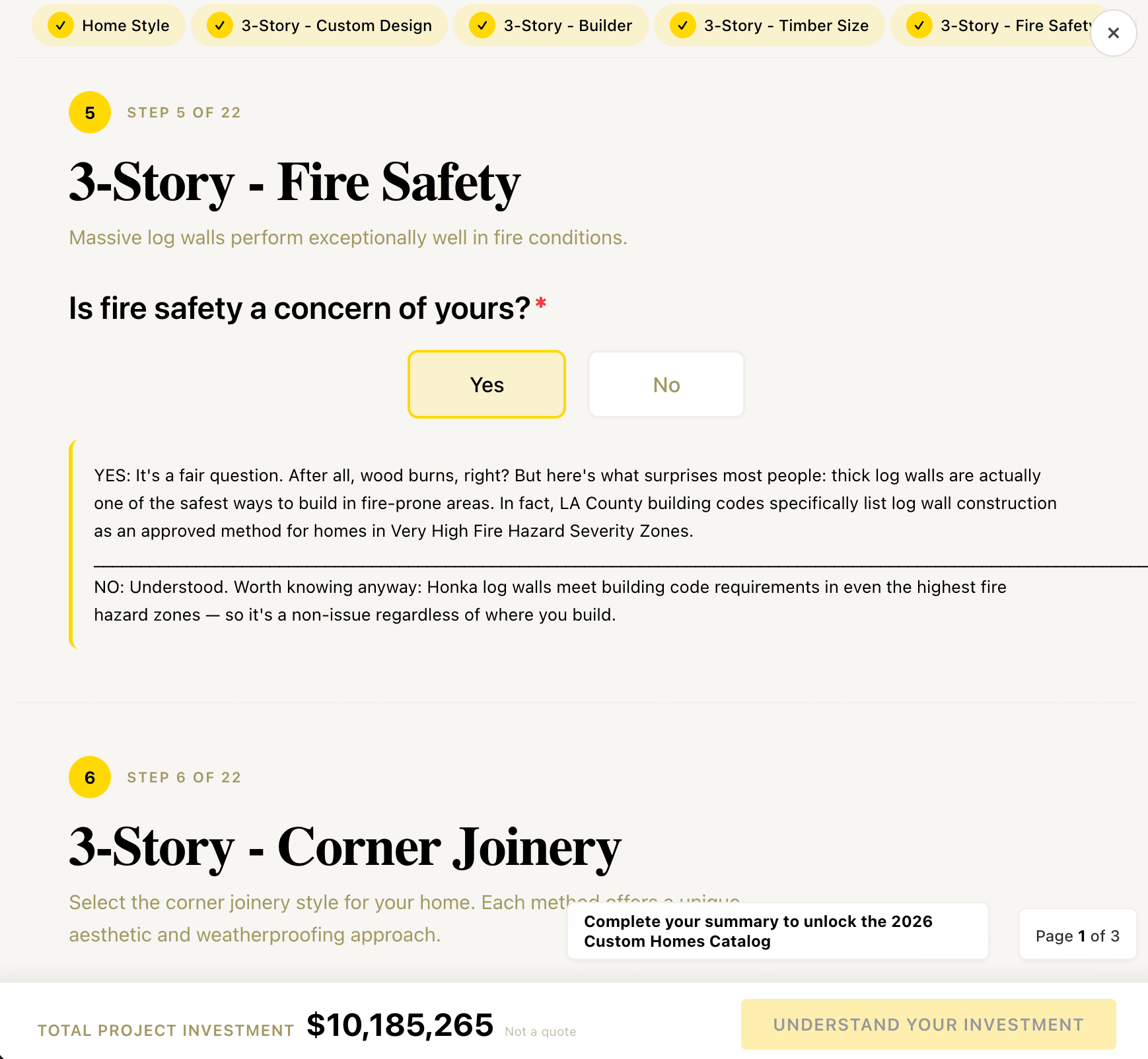
Same source, two surfaces
The pitch text the founders wrote, exactly where the customer is
Ask a prospect ‘is fire safety a concern?’ — they answer Yes — and the Honka pitch shows up inline, framed as the founder would have said it on a call. The same line gets woven into the personalized spec sheet PDF an hour later. One source, two surfaces, zero copy-paste.
// src/lib/ai/prompts.ts
const QUALIFYING_PITCHES = [
  {
    match: "fire safety",
    title: "The campfire secret",
    pitch: "Thick log walls are actually one of the safest ways to build in fire-prone areas. LA County codes specifically list log wall construction as approved for Very High Fire Hazard Severity Zones.",
  },
  {
    match: "next 100 years",
    title: "Reimagine your legacy home",
    pitch: "A Honka Home lasts for centuries. It is the most enduring legacy we can leave for future generations.",
  },
  {
    match: "energy efficiency",
    title: "Energy efficient naturally",
    pitch: "Honka log systems provide a naturally energy-efficient home through thermal mass properties and prevention of air infiltration.",
  },
  // ...3 more pitches, each from Mark and Tom's own sales playbook
]

// For every "Yes" answer in the prospect's qualifying questions:
for (const a of input.answers) {
  const pitch = QUALIFYING_PITCHES.find((p) =>
    a.question_label.toLowerCase().includes(p.match)
  )
  if (pitch && a.value.toLowerCase() === "yes") {
    qualifyingLines.push(
      `- "${a.question_label}" → Yes
  Honka message: "${pitch.title}" — ${pitch.pitch}`
    )
  }
}
The outcome
What changed
I think we benefited more than you did. Based on what we’ve done and the dollars we’ve spent with past professional services vendors, we definitely benefit here big time.
Mark · Honka US
Decisions that mattered
Claude Haiku, not Sonnet, for the PDFs
Why
Spec sheets need to feel instant — every extra second feels like the page hung. Haiku hits sub-2-second latency on our prompt size with the same JSON-schema adherence we’d get from Sonnet at a fraction of the cost.
Trade-off considered
Slightly less stylistic flair in long-form copy. Acceptable because the founders’ voice carries the soul — we just needed the model to weave it in faithfully.
Explicit branching, not tag-based routing
Why
Every Honka home style (Ranch, Walkout, 2-Story) needs its own unique step sequence. We modeled it as explicit "this step → that step" jumps on each option, so the flow stays auditable and Mark and Tom can change branches from the admin UI without code.
Trade-off considered
Steps duplicate where two paths converge. Worth it for editability and for keeping the founders unblocked.
Iframe-embed-first, not standalone
Why
Honka’s traffic already lived on the HubSpot marketing site they’d built over years. Forcing prospects to leave for a separate configurator domain would have leaked conversions. Iframe + postMessage SDK keeps the prospect in their existing funnel.
Trade-off considered
A few CORS gotchas and a slightly more complex auth model for the admin panel. Worth it to preserve their analytics and SEO equity.
Tech Stack
Would I recommend you for something like this? Absolutely. Would I recommend anybody else we work with? No.
Tom · Honka US
Want a system like this for your business?
Here's how to figure out if it's the right move — without talking to a salesperson.
Spec it in Mission Control
Answer a few questions and our AI drafts a build spec for your idea — free, no signup.
Pressure-test it anywhere
Paste the spec into Claude, ChatGPT, or any AI for a free second opinion on feasibility and cost.
Talk to us if it's a fit
When you're ready, we'll scope, price, and ship — same studio that built this.